Packaging Choices for Biofertilizer Powders, Granules, and Liquid Extracts
Packaging in biofertilizer manufacturing is not just a container decision. It is a process-control decision that affects organism viability, moisture movement, clumping, dust, dosing behavior, shelf presentation, and field performance after dispatch.
For a plant manager, the right package is the one that protects the biology without creating avoidable problems on the filling line, in the warehouse, or at the distributor’s yard. That usually means matching the package to the physical form of the product, the carrier system, the expected storage conditions, and the sensitivity of the living organisms or bioactive extracts inside.
As an enzyme supplier for biofertilizer manufacturing, Rootwake Bioprocess looks at packaging from the upstream side as well. Enzyme-assisted substrate conversion, carrier conditioning, extract clarification, and viscosity management can all influence what the finished material asks from its package.
Start with the product form, not the bag or bottle
A packaging specification should begin with the material behavior of the biofertilizer itself.
Powders
Powdered biofertilizers are often sensitive to:
- moisture gain during storage
- dust formation during filling and handling
- segregation between carrier, microbial biomass, and additives
- compaction under pallet load
- poor discharge from small packs or bulk bags
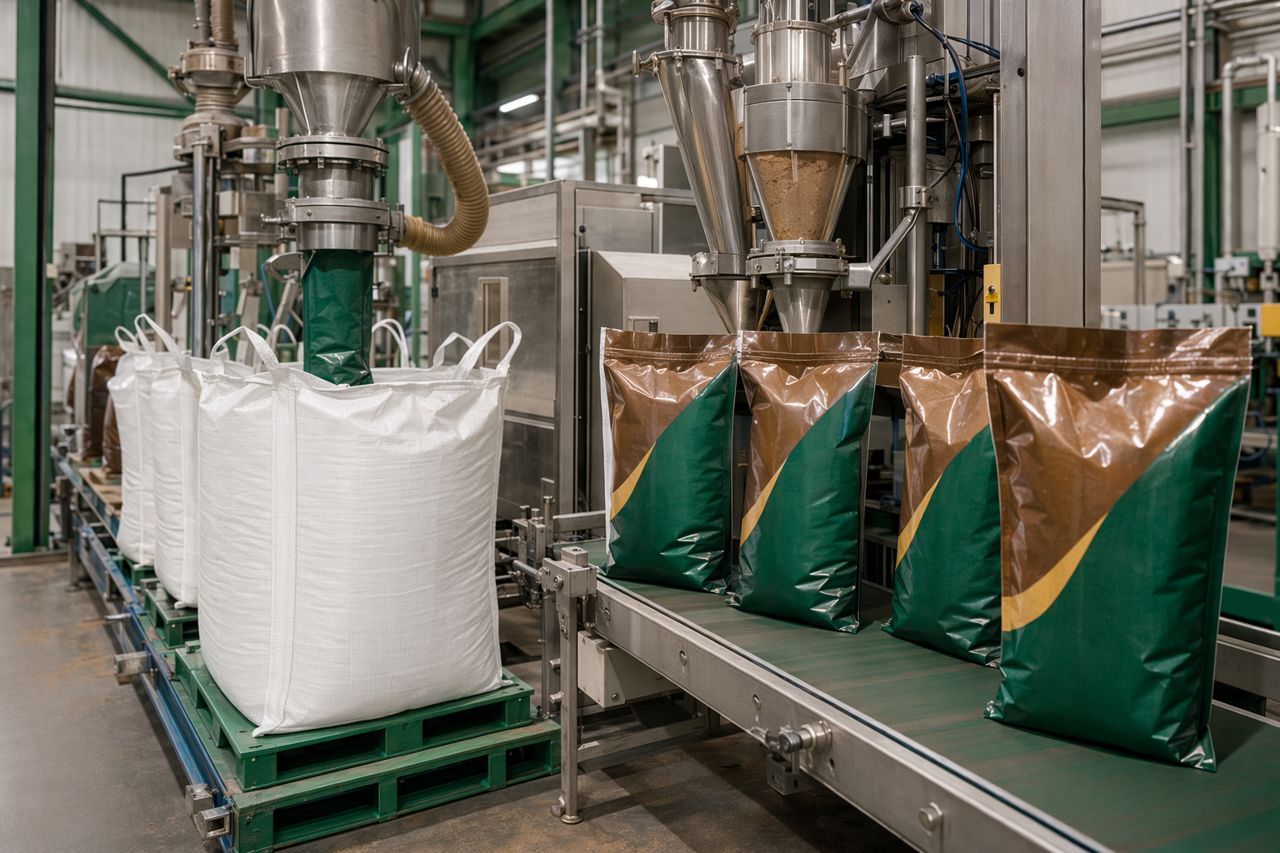
For powders, the package must reduce moisture exchange while still supporting practical plant handling. Multi-layer laminated pouches, lined woven sacks, and sealed fiber drums can all work depending on fill weight, route to market, and storage exposure.
If the powder contains viable organisms, excessive moisture can wake the system too early. Too little moisture protection can also lead to caking, uneven dosing, and distributor complaints. The packaging decision needs to preserve the physical state that your process worked to create.
Granules
Granular biofertilizers usually bring different priorities:
- abrasion resistance
- granule integrity during transport
- controlled moisture protection
- low breakage at filling points
- compatibility with applicator equipment
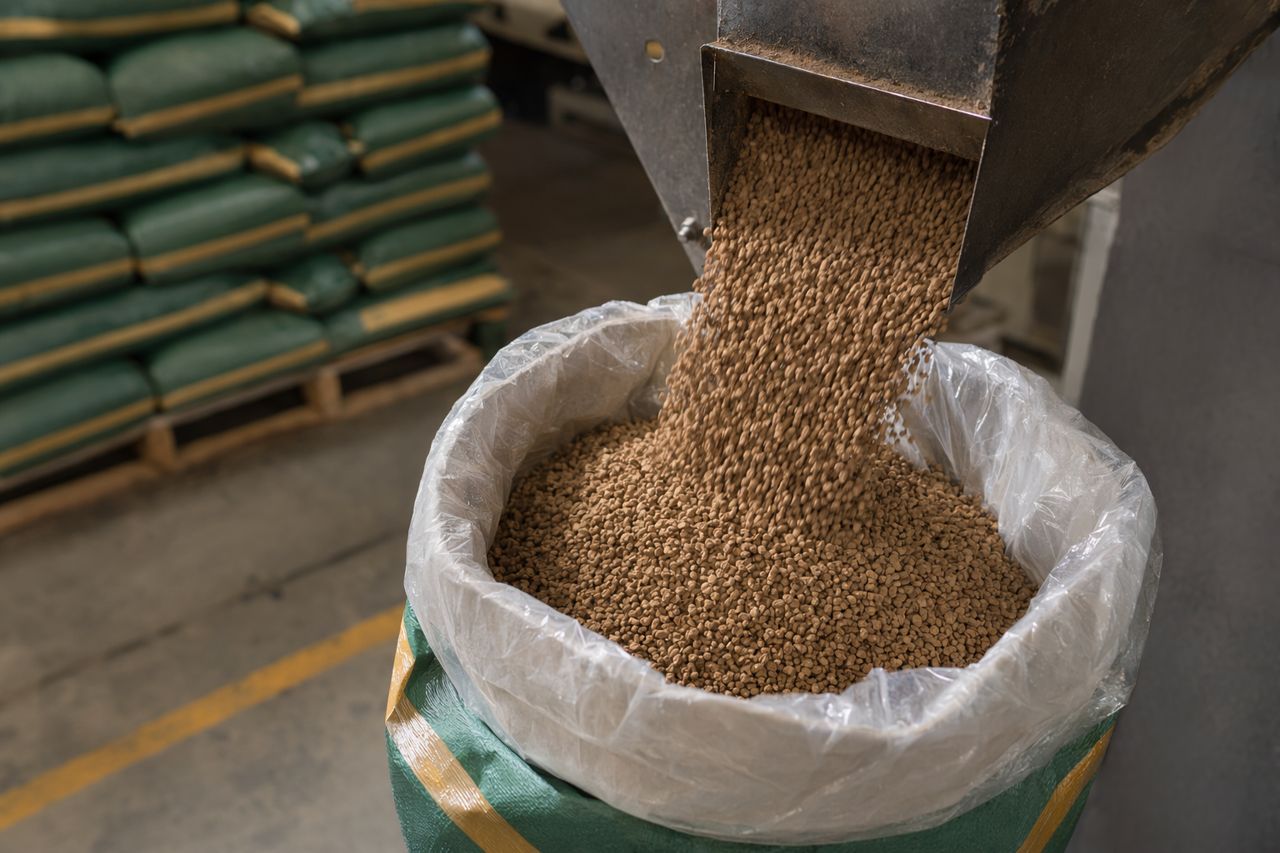
Granules can tolerate rougher handling than fine powders, but they still need protection from crushing, humidity cycling, and bag rub. A strong outer pack with an appropriate inner barrier is often more valuable than a visually premium pack that fails under stacking pressure.
If granules are produced on a carrier that has been enzyme-conditioned for better binding or nutrient exposure, packaging should help maintain that structure until use. Granule attrition is not only a cosmetic issue; it can change flow, dosing, and user experience.
Liquid extracts
Liquid biofertilizer extracts and biological suspensions introduce another set of packaging risks:
- swelling or paneling of containers
- sedimentation
- viscosity drift
- leakage under temperature changes
- compatibility with caps, liners, and container resin
- headspace behavior
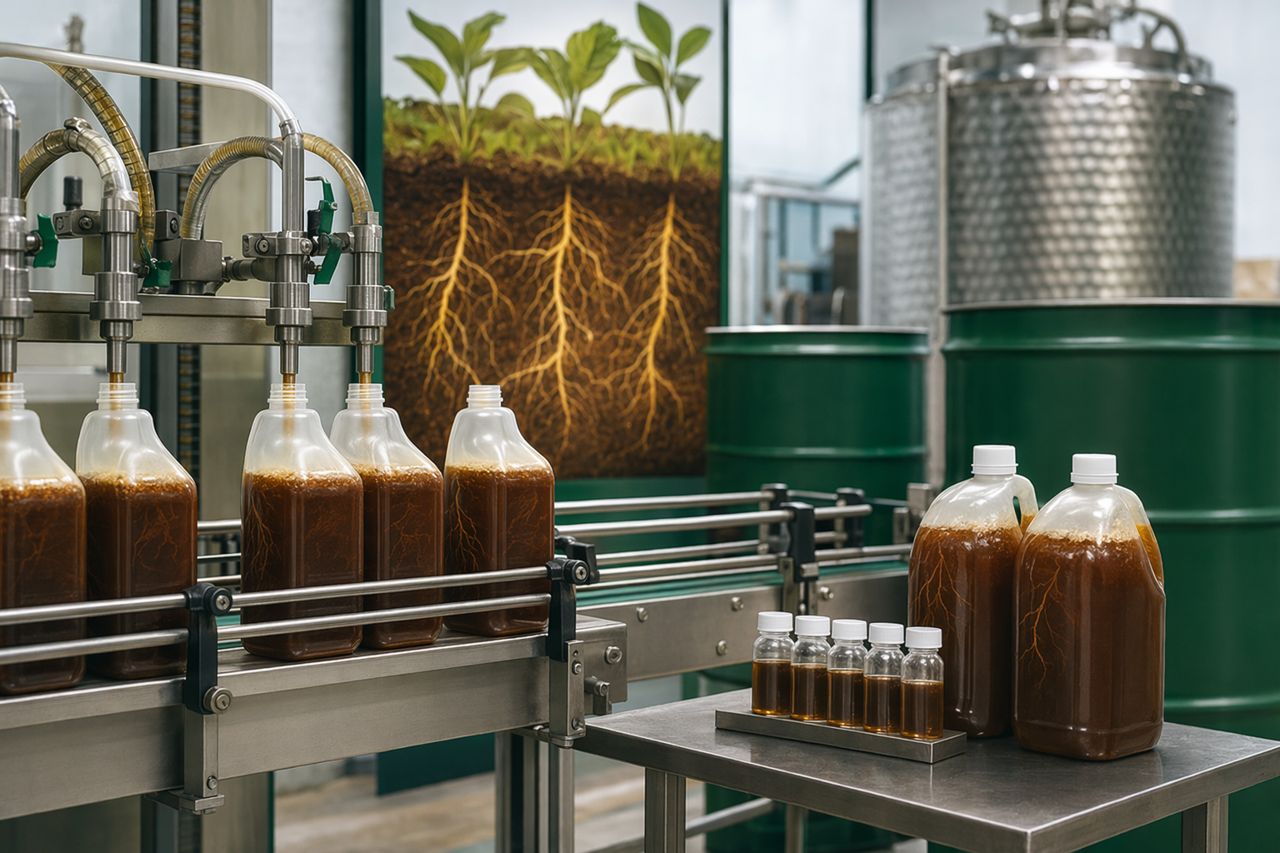
Liquids need packaging that can handle the chemistry and the biology. The container must maintain closure integrity without encouraging instability. For extracts produced through enzyme-supported processing, the downstream package should be selected after observing viscosity, suspended solids, odor profile, and settling behavior over time.
Barrier properties matter, but so does the production floor
It is easy to specify a high-barrier package on paper. It is harder to run it consistently on the line.
Before approving a packaging format, check:
- whether the pack can be filled cleanly at target throughput
- whether seals remain reliable with powder dust or liquid residue near the closure
- whether the pack tolerates normal pallet compression
- whether operators can inspect seal quality without slowing the line
- whether the package fits existing checkweighing, coding, and carton systems
- whether the pack can be sampled and retained for quality review
A package that protects the product but disrupts production may not be the best commercial answer. Biofertilizer manufacturers need packaging that protects living value while remaining practical for daily manufacturing.
Moisture control is a biological decision
Moisture is one of the most important variables in biofertilizer packaging. It influences dormant cells, carrier stability, enzyme-treated substrate residues, powder flow, and microbial survival.
For dry products, the goal is usually to keep the finished material in a stable, low-change state until application. That may require moisture-barrier films, liners, desiccant strategy, controlled filling-room humidity, or faster transfer between final drying and sealing.
For liquid products, moisture is not the issue in the same way. Instead, the concern shifts to microbial balance, suspended solids, gas behavior, viscosity, and container closure performance. The bottle or drum must suit the living system inside, not just the marketing format outside.
Oxygen and headspace should be intentional
Some biofertilizer organisms are more sensitive to oxygen exposure than others. Some liquid extracts may also change behavior depending on headspace, residual nutrients, and storage temperature.
Packaging teams should avoid treating headspace as a leftover volume. It is part of the product environment.
Questions worth asking include:
- Does the product need minimized oxygen exposure?
- Does it release gas during storage?
- Does headspace affect container deformation?
- Does the closure allow unwanted exchange?
- Will transport temperature changes alter internal pressure?
These questions are especially important when finished products contain living cultures, enzyme-processed extracts, or carbon-rich substrates that may continue to interact after filling.
Match the package to the carrier system
Carrier choice and packaging choice are connected. Peat, lignite, composted material, mineral carriers, starch-based carriers, and liquid nutrient matrices each behave differently.
A carrier with high moisture affinity may demand stronger barrier protection. A dusty carrier may require packaging that supports cleaner filling and stronger seals. A granular carrier may need abrasion-resistant packaging and gentler transfer. A liquid extract with fine suspended solids may need container geometry that supports mixing before use.
This is where upstream formulation and downstream packaging should be discussed together. If an enzyme step improves substrate conversion or helps condition a carrier, the packaging should preserve the resulting handling characteristics.
Distribution conditions often decide the final format
Biofertilizer packages may leave the plant in good condition and fail later because the distribution environment was not fully considered.
Consider the real route:
- warehouse dwell time
- hot truck bodies
- damp dealer storage
- outdoor pallet exposure
- repeated manual handling
- long-distance vibration
- mixed pallet loads
- farm-level partial use
A premium pouch may be appropriate for small retail units. A lined sack may be better for dealer channels. A drum or intermediate container may suit liquid bulk supply. The right decision depends on how the product actually moves, not only how it looks in a catalog.
Practical packaging checks before scale-up
Before locking a packaging specification, Rootwake Bioprocess recommends a short, production-aware review:
- Fill trial on the intended line or a close equivalent.
- Seal or closure inspection after normal product contact.
- Pallet stacking and vibration observation.
- Short-term and extended storage under realistic conditions.
- Viability and physical handling checks at defined review points.
- Distributor handling simulation where possible.
- Retain samples from commercial trial lots.
The aim is not to overcomplicate packaging. The aim is to prevent packaging from becoming the weak link in a biological product.
Where enzyme supply connects to packaging performance
Enzymes do not replace good packaging. But the right enzyme system can influence the material entering the package.
In biofertilizer production, enzyme-supported processing may help with:
- converting complex organic substrates into more usable fractions
- improving extract consistency before filling
- supporting carrier conditioning
- reducing batch-to-batch variation in material behavior
- improving downstream handling of certain slurries or extracts
When the upstream process is more consistent, packaging decisions become more predictable. That is why selecting an enzyme supplier for biofertilizer manufacturing should involve discussion of the finished format, not only the conversion step.
Build the packaging specification around the product’s life
A useful packaging specification should describe more than material thickness and pack size. It should cover the product’s full life from final blend or extract tank to field use.
Include:
- product form and moisture sensitivity
- organism viability requirements
- carrier or extract behavior
- fill temperature and filling method
- closure or seal expectations
- storage and transport assumptions
- pallet pattern and stacking limits
- labeling, batch coding, and traceability needs
- sampling and retain procedures
Packaging is part of the bioprocess. Treating it that way reduces complaints, rework, and avoidable loss of living performance.
Request enzyme guidance for your packaging pathway
If you are developing or scaling a powder, granule, or liquid extract biofertilizer, Rootwake Bioprocess can help review how enzyme-supported processing may affect downstream handling and packaging choices.
Use the on-site request a quote form to share your product form, substrate or carrier type, target production process, and current packaging challenge. We will respond with practical enzyme supply options aligned to manufacturing reality.