Enzyme supplier for biofertilizer manufacturing
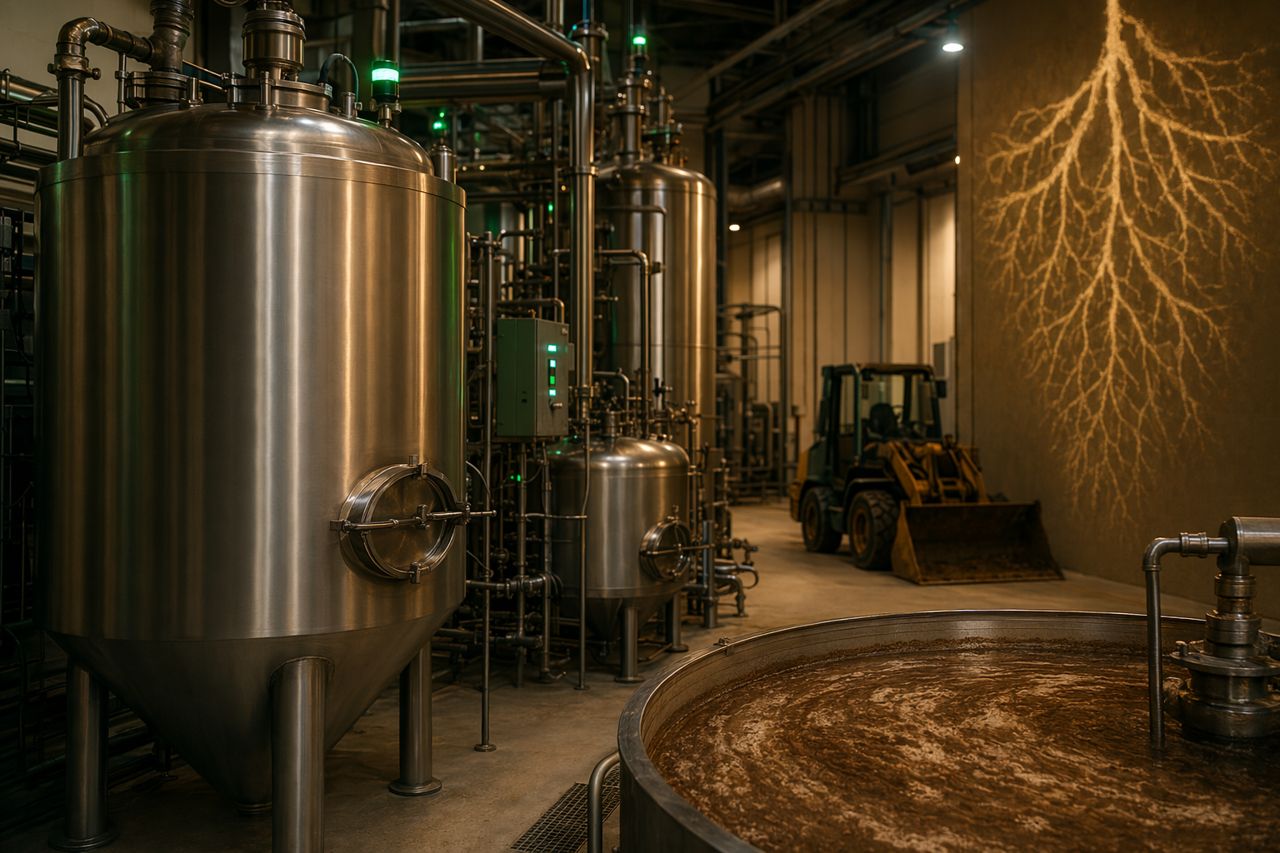
Biofertilizer production is a living process, but it still has to run like a plant-floor operation. Rootwake Bioprocess supplies enzyme inputs for manufacturers making compost-extract, microbial soil amendment, organic residue, and carrier-based fertility products.
We help production teams choose practical enzyme blends and single-enzyme materials that fit the substrate, organism strategy, batch sequence, and downstream handling requirements of commercial biofertilizer manufacturing.
Enzyme inputs built around real biofertilizer workflows
The right enzyme is not just a lab recommendation. It has to make sense inside your process: when it is added, what it acts on, how it behaves in the mix, and whether it supports the final product you are trying to ship.
Rootwake Bioprocess works with manufacturers using enzymes to support:
- Compost extract and fermented botanical inputs
- Humic and organic-matter-rich soil amendments
- Carrier conditioning for microbial inoculant products
- Plant-residue conversion before blending or maturation
- Protein, starch, fiber, and phytate breakdown in mixed substrates
- More consistent slurry behavior before filtration, blending, or packaging
Core enzyme categories for biofertilizer production
Cellulase for plant fiber conversion
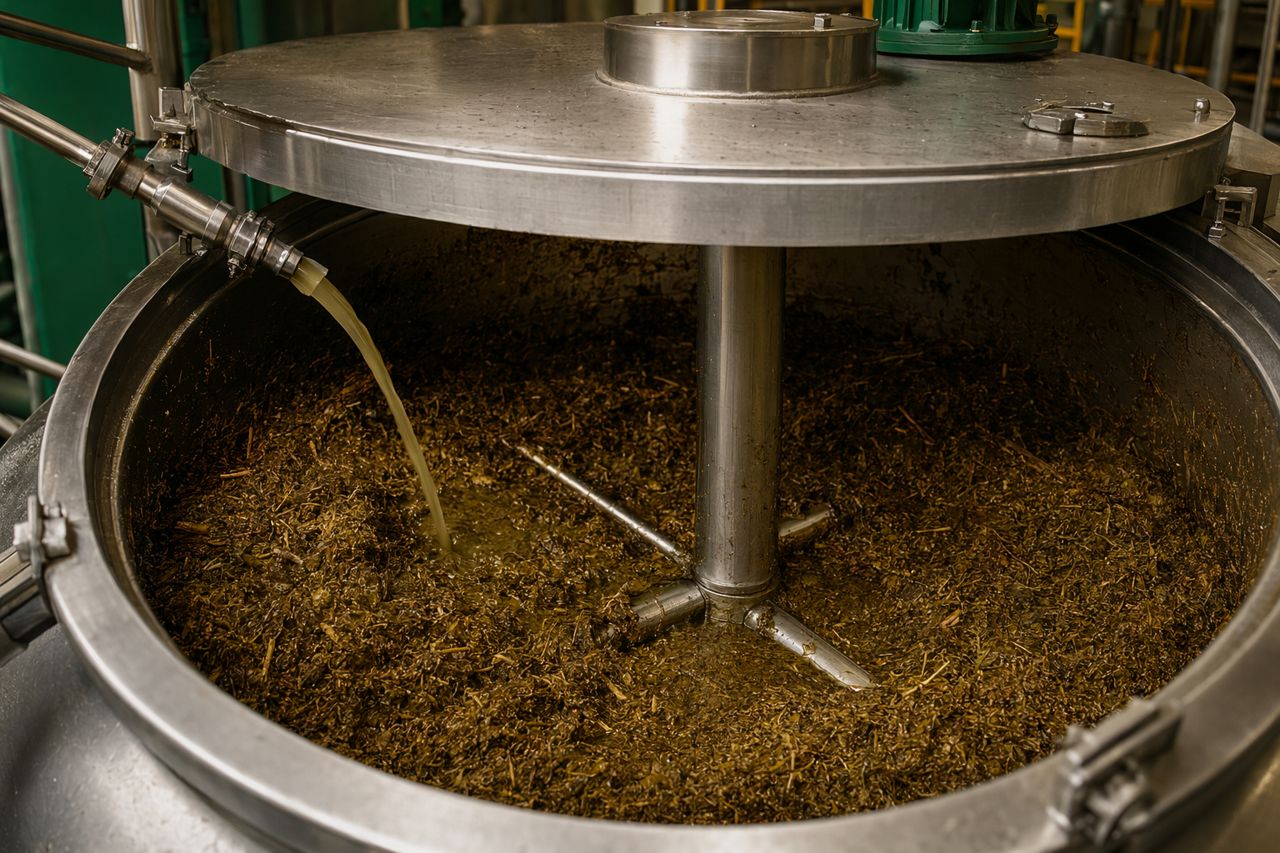
Cellulase can help open up fibrous crop residues, composted plant matter, and botanical substrates. For production teams, the value is practical: improved substrate accessibility, more predictable extraction behavior, and easier handling of fiber-heavy material streams.
Typical applications include:
- Plant residue pre-treatment
- Compost extract production
- Organic carrier conditioning
- Fiber-rich liquid amendment processing
Amylase for starch-bearing substrates
Amylase supports the breakdown of starches in grain-derived inputs, root materials, and other carbohydrate-rich feedstocks. In biofertilizer manufacturing, it can help reduce variability where starch content affects viscosity, mixing, and microbial substrate availability.
Typical applications include:
- Carbohydrate-rich fermentation feeds
- Botanical and grain-based extracts
- Slurry viscosity management
- Pre-conversion before microbial inoculation or blending
Protease for protein-rich organic matter
Protease is used where proteinaceous inputs need controlled hydrolysis before or during soil amendment production. It can support nitrogen-bearing organic material conversion while helping manufacturers manage solubility, odor risk, and batch consistency.
Typical applications include:
- Seed meal and plant protein inputs
- Fermented organic nutrient blends
- Amino-rich soil amendment intermediates
- Mixed organic residue processing
Phytase for phytate-bound phosphorus release
Phytase can support the conversion of phytate-containing plant materials where phosphorus availability is a formulation concern. For biofertilizer producers, it is often considered alongside microbial strategy, mineral content, and the intended soil-use profile.
Typical applications include:
- Bran, seed, and grain-derived substrates
- Plant-based nutrient extracts
- Phosphorus-focused organic amendments
- Pre-treatment stages before microbial blending
Protect organism viability while improving substrate conversion
Many biofertilizer products depend on living bacteria, fungi, or spores. Enzyme selection should not be isolated from the biology of the finished product.
Rootwake Bioprocess helps teams think through:
- Whether enzyme treatment belongs before, during, or after inoculation
- How temperature, pH, contact time, and substrate load affect both conversion and culture stress
- Whether residual enzyme activity may influence viscosity, settling, or package stability
- How carrier, moisture, salinity, and organic acids may interact with living organisms
- How to design a practical pilot batch before committing to plant-scale use
The goal is not to overcomplicate the process. The goal is to make enzyme addition predictable enough for production.
Designed for batch consistency and downstream handling
A useful enzyme program should reduce friction in the plant, not create another variable. We focus on the production outcomes that matter to operators and technical buyers.
Better conversion control
Match enzyme type and timing to the substrate fraction you actually need to modify: fiber, starch, protein, or phytate.
Easier slurry and extract handling
Support more consistent mixing, pumping, settling, filtration, or blending where organic solids make the process difficult.
Cleaner scale-up decisions
Move from bench screening to pilot and production with a defined addition point, process window, and handling plan.
Supply that fits manufacturing
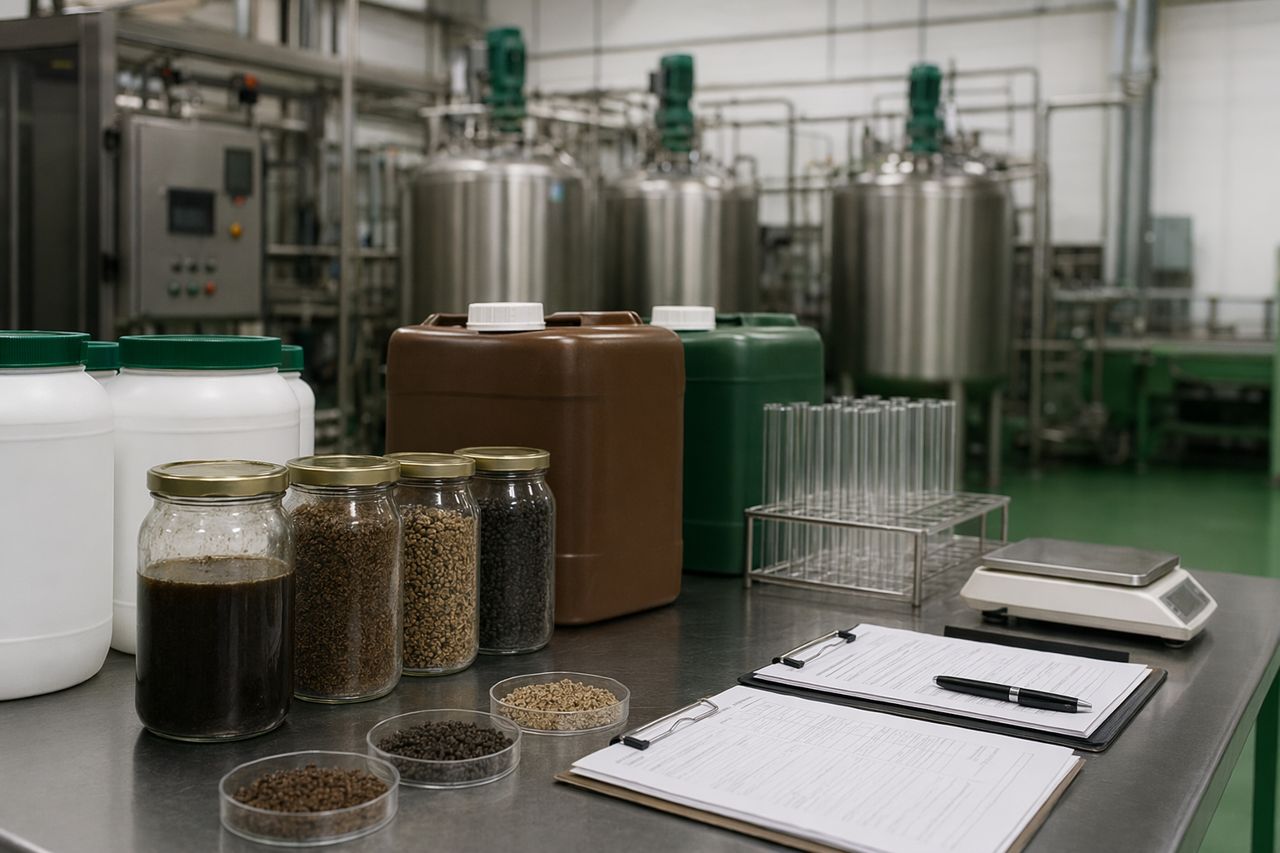
Access bulk enzyme materials with lot documentation, practical packaging options, and quote support for recurring production schedules.
How we support your purchasing and process team
Rootwake Bioprocess is a technical enzyme supplier for biofertilizer manufacturing, serving teams that need both commercial reliability and process-aware guidance.
We can help with:
- Selecting cellulase, amylase, protease, phytase, or blended enzyme systems
- Reviewing substrate type, solids load, and process sequence
- Planning a controlled pilot evaluation without unnecessary lab complexity
- Aligning enzyme addition with organism viability targets
- Supplying bulk quantities for production trials and recurring manufacturing
- Coordinating documentation, packaging, and lead-time expectations
A practical path from evaluation to supply
1. Share your process context
Tell us the substrate, organism type, production format, and the point in the process where enzyme treatment is being considered.
2. Define the production goal
Common goals include improved extraction, reduced viscosity, more complete conversion, better carrier conditioning, or more consistent finished batches.
3. Select the enzyme approach
We recommend a single enzyme or blend based on the material stream and the handling outcome you need.
4. Run a controlled production trial
Start with a structured pilot batch that reflects your real process rather than an isolated lab condition.
5. Move into quoted supply
Once the material fit is confirmed, request a quote for the package size, schedule, and documentation your plant requires.
Request a quote
If you are evaluating enzymes for a biofertilizer, compost-extract, soil-amendment, or microbial carrier process, contact Rootwake Bioprocess with your target application and expected production scale.
Use the on-site request form and include:
- Substrate or feedstock description
- Finished product format
- Current process sequence
- Target enzyme category, if known
- Production trial or recurring supply requirement
- Packaging and documentation needs